Published : 2026-01-20
As a vital strategic material, oil often becomes a focus of the news. When people follow related news, they may notice that the terms "petroleum" and "crude oil" appear in reports, so what exactly is the difference between them?
Its units of measurement are "barrels" and "tonnes", and which one does China use?
"Petroleum" covers a broader scope
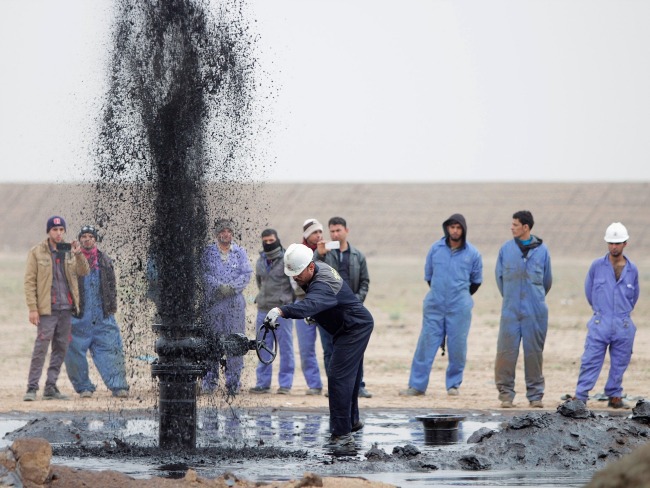
First, let's talk about "petroleum" and "crude oil". Many people think the two are the same thing and use them interchangeably, but strictly speaking, their concepts are not exactly the same.
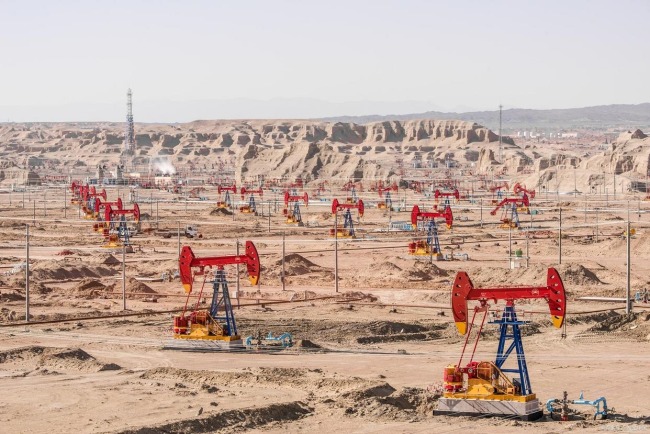
According to the distinction in industry practice, the unprocessed oil extracted from wells is "crude oil", which is the dark brown, viscous, oily liquid seen in news footage.
The scope of "petroleum" is broader, which means it includes crude oil and its derivative products, such as petrol and kerosene obtained from refining and processing crude oil.
When issues such as production volume, import and export volumes, and oil prices are mentioned in the news, they generally refer to crude oil.
As for the units of measurement for crude oil, it was just mentioned that there are two types: "tonne" and "barrel". A "tonne" is used to calculate weight, which should be easier to understand, but a "barrel" can be large or small, so what size is used for crude oil?
Read more: Does China have oil? China is a major oil-producing country!
Why is one barrel of crude oil 42 gallons?
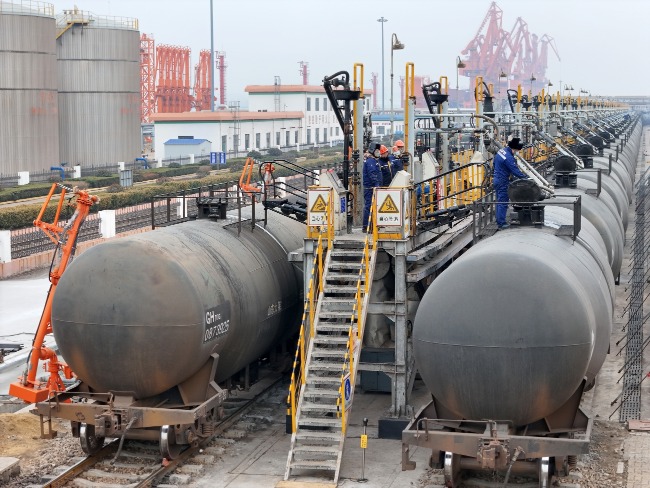
Actually, the "barrel" for crude oil was originally a container that could hold 42 gallons of liquid. 42 gallons is equivalent to nearly 159 litres, which can roughly fill a standard bathtub.
Why 42 gallons? A widely circulated theory is that when oil fields were first discovered in the United States in the 19th century, crude oil was stored and transported in wooden barrels.
Initially, the wooden barrels people used were of various sizes, until oil tycoon John D. Rockefeller founded the Standard Oil Company and made extensive use of the family's self-produced wooden barrels. This 42-gallon capacity barrel gradually became the industry standard.
Of course, modern crude oil storage and transport no longer necessarily use actual oil barrels. In most cases, "barrel" only retains its function as a unit of measurement.
Additionally, there is no single conversion formula for crude oil "barrels" and "tonnes" that applies to all situations, because crude oil from different production areas has different densities, resulting in weight differences, and different seasons and temperatures also have an effect on this.
China mostly uses "tonne" as the unit

For the convenience of calculation, the industry generally uses 34-degree Saudi Arabian light crude oil as a benchmark, where one tonne of crude oil is equivalent to approximately 7.33 barrels, and one barrel is approximately 136 kilograms.
Currently, European and American countries and some oil-producing countries measure crude oil using "barrel" as the unit.
As the largest crude oil importing country, China also uses "barrel" for measurement in international cooperation, but for its domestic policies and statistical systems, the unit must be converted to "tonne", which is why "tonne" is more common when you read oil news from the Chinese Mainland.
Like China, Russia and some countries of the Commonwealth of Independent States also commonly use "tonne" for measurement.
Finally, it was mentioned earlier that China is the largest oil importing country. Does this reflect that China itself lacks oil resources? This related question will be discussed in another article.
Read more: How much rare earth does China really have?